01
Distance
Driving, television, faces across a room and outdoor activity.
Because how you see your life matters
Multack Eye Care / Personalized lens planning
A lens plan for the life you want to see.
Lens selection begins with your eyes, your daily life and the distances that matter most to you.
Our lens-planning approach supports cataract surgery and refractive lens exchange / clear lens exchange.
Your life, in focus
Every lens design distributes focus differently. The right conversation starts with your priorities and accepts that every option involves tradeoffs.
Driving, television, faces across a room and outdoor activity.
Computer screens, dashboards, cooking and conversations.
Phones, menus, labels, books and fine detail at close range.
An individual choice
The categories below are a starting point. Your surgeon will narrow the field after reviewing your measurements, ocular health, prior procedures, night-driving needs and tolerance for optical tradeoffs.
The standard lens option generally covered by insurance. This conventional, non-toric lens is designed for one focal distance and does not correct corneal astigmatism. Glasses are usually needed after surgery and may be needed for distance, computer use and reading. Depending on your prescription, this can mean wearing bifocal, trifocal or progressive glasses throughout the day.
A sharper focus when you have astigmatism. A toric lens corrects corneal astigmatism as part of your surgical plan. Toric correction is available within several lens families, including certain monofocal and full-range designs. Your measurements help your surgeon match the correction to your eye.
Distance through intermediate emphasis. EDOF lenses can expand functional range while generally preserving a more distance-forward visual profile. Plan on using reading glasses for near tasks, particularly small print and prolonged reading.
Examples include TECNIS PureSee, Clareon Vivity and TECNIS Symfony. Your surgeon will discuss how each design fits your eye health, daily activities and vision goals, along with candidacy and availability.
Distance, intermediate and near vision. This group includes trifocal, multifocal and spiral lens designs that aim to reduce dependence on glasses across everyday activities. Halos or glare can occur, especially while adapting.
Examples include PanOptix Pro, TECNIS Odyssey, enVista Envy and RayOne Galaxy. Your surgeon will explain the differences between these designs and assess candidacy and availability.
Refinement after surgery
A prescription refined after surgery. The RxSight Light Adjustable Lens can be adjusted with a series of in-office light treatments after the eye heals. It requires additional visits and strict compliance with postoperative UV-protective eyewear until treatment is complete.
Explore the Light Adjustable LensSurgical technology
Computer-guided precision for key steps. Femtosecond laser technology can automate selected steps of cataract surgery, including the capsule opening and initial lens fragmentation. It can also create certain corneal incisions without a handheld blade. Your surgeon plans and controls the treatment.
At a glance
Review the primary goal and common considerations for each strategy, then talk through the options with your surgeon.
| Lens strategy | Primary goal | Common consideration |
|---|---|---|
| Standard monofocal | One selected focal distance | Glasses usually needed; may be needed for distance, computer use and reading |
| Enhanced monofocal (Monofocal Plus) | Distance vision with a modest extension of focus | These designs extend focus beyond a standard monofocal lens; reading glasses are generally needed for near tasks. |
| Monofocal toric | Correct astigmatism and target distance or near | Typically reduces the need for glasses at the chosen distance. With both eyes set for the same target, glasses are usually needed for the other range. |
| EDOF | Distance and intermediate range | Many patients perform distance and intermediate tasks without glasses. Reading glasses are typically needed for near work, especially small print. |
| Full-range lens designs | Distance, intermediate and near | Many patients enjoy everyday activities without glasses. Readers may help with tiny print or low light. Halos, glare and an adjustment period are possible. |
| Light Adjustable Lens | Fine-tune the prescription after surgery with light treatments | Often reduces the need for glasses at the chosen distance or near target. With both eyes set for the same target, glasses are usually needed for the other range. Extra visits and prescribed UV-protective eyewear are required. |
A personalized plan matters. Toric correction is also available in selected EDOF and full-range lenses. Selected patients may choose blended vision with monofocal lenses or LAL, using different focal targets in each eye. Your eye health and treatment plan affect your need for glasses.
Explore the portfolio
Explore selected lens designs from Alcon, Johnson & Johnson, Bausch + Lomb, Rayner and RxSight. These illustrations introduce the options; your surgeon helps select a lens after reviewing your eye measurements, eye health and visual goals.
Astigmatism correction, tailored to you. All six lens families below offer toric options to address astigmatism. Your eye measurements and clinical needs determine the appropriate model.

ALCON
A trifocal lens designed to support distance, intermediate and near vision in one lens. PanOptix Pro is an option for patients seeking less reliance on glasses across everyday activities, from driving to reading. Your surgeon will review candidacy and discuss the visual tradeoffs, including possible halos or glare.

ALCON
A non-diffractive extended depth-of-focus lens designed for clear distance and intermediate vision, with some functional near vision. Vivity can support everyday activities such as driving, computer use and cooking while extending focus beyond a standard monofocal lens. Plan on using reading glasses for near tasks, particularly small print and prolonged reading.

JOHNSON & JOHNSON
A full-range lens designed for distance, intermediate and near vision with reduced dependence on glasses. Odyssey may suit patients who want a broad range of focus for activities such as driving, screen use and reading. Your surgeon will assess your eye health and explain potential halos, glare and visual adaptation.
JOHNSON & JOHNSON
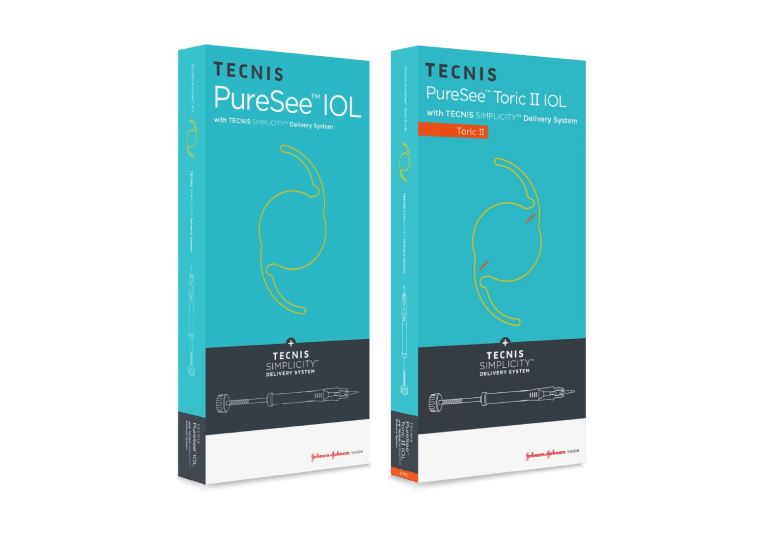
A purely refractive extended depth-of-focus lens designed to maintain distance vision while expanding the intermediate range. PureSee may suit patients whose daily priorities include driving, computer work and other activities at arm’s length. Plan on using reading glasses for near tasks, particularly small print and prolonged reading. Your surgeon will assess candidacy and review the visual tradeoffs.

BAUSCH + LOMB
A full-range lens designed for distance, intermediate and near vision. Its ActivSync optic distributes light across these distances and prioritizes distance in lower-light conditions. Your examination helps determine whether this design fits your eyes and visual goals.
RAYNER
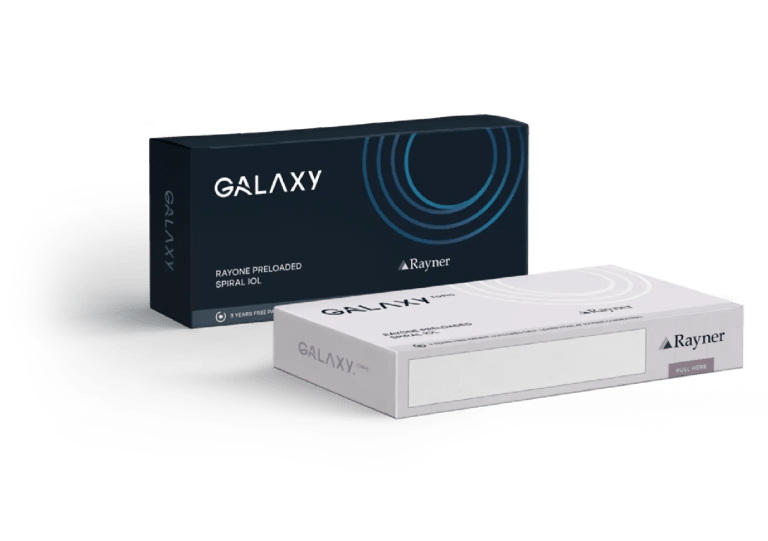
A full-range lens with a non-diffractive spiral optic. Galaxy uses a different approach to managing light across distance, intermediate and near vision. Your surgeon can discuss how its design compares with other lens options and whether it is appropriate for you.
RxSight / Light Adjustable Lens
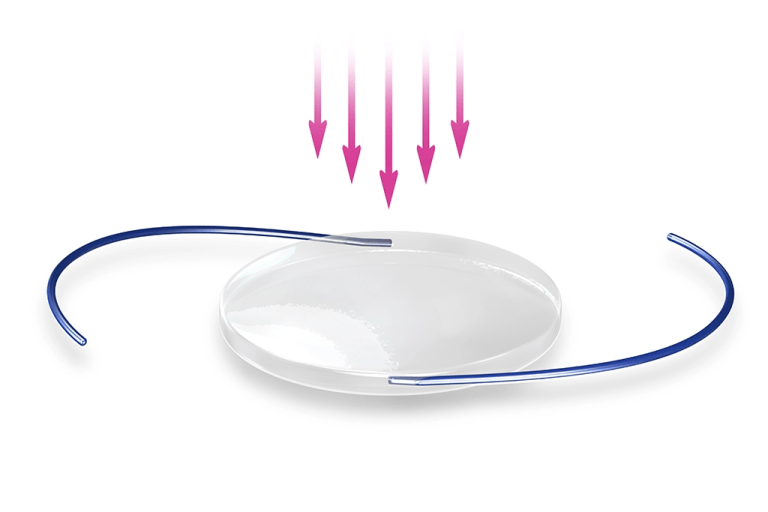
A lens whose prescription can be refined after surgery, once your eye has healed. In-office light treatments adjust the lens power before final lock-in treatments. The adjustment process can also refine astigmatism correction. This option involves additional appointments and wearing prescribed UV-protective glasses as directed through 24 hours after the final lock-in.
The MEC lens-selection process
Planning ahead
Insurance coverage generally applies to medically necessary cataract surgery and a standard monofocal lens, subject to plan terms, deductibles, copayments and coinsurance. Advanced technology lenses, laser-assisted options and services intended to reduce dependence on glasses may involve additional patient responsibility.
View Financing OptionsPlan your consultation
Schedule a cataract consultation with Multack Eye Care to build a vision strategy around your eyes and your life.
Lens availability and candidacy vary. No lens can guarantee complete freedom from glasses, and visual symptoms such as glare, halos or reduced contrast can occur with cataract surgery and intraocular lenses. Your surgeon will review benefits, limitations, alternatives and risks based on your individual examination.